Vintage Florals Vol. 8: A Designer's Guide to This Paper Collection
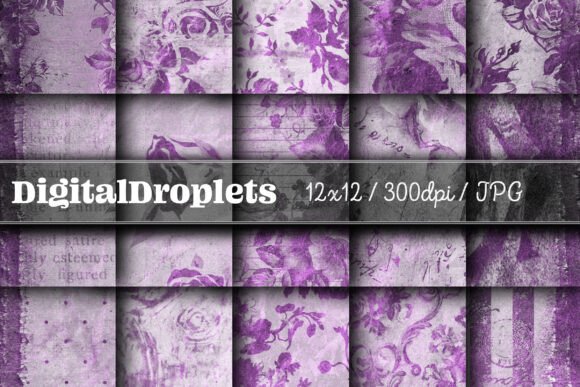
There’s a certain texture to nostalgia. It’s the slightly uneven edge of old paper, the faded impression of a pressed flower, the ghost of handwritten script beneath a pattern. For designers, crafters, and brand builders working within vintage, rustic, or organic aesthetics, capturing that authentic feel is crucial. The Vintage Florals Vol. 8 | Collection is a set of 20 digital papers designed to do exactly that. It’s not just a pack of floral patterns; it’s a toolkit for creating projects with depth, story, and a tangible sense of history.
Deconstructing the Visual Style
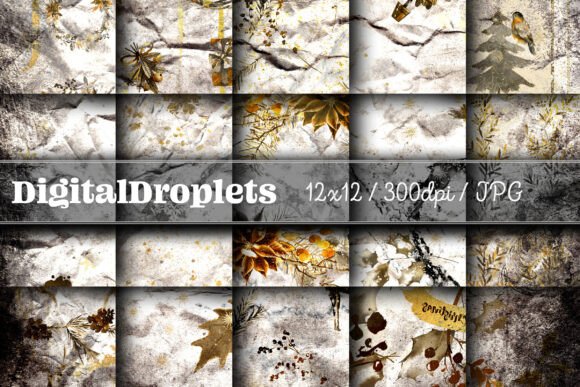
At its core, this collection is built on a foundation of contrast. Each of the 20 pages presents a distinct floral pattern—from delicate botanicals to fuller blooms—overlaid onto textures that mimic aged paper. You’ll see subtle foxing, fiber variations, and soft color washes that provide an immediate sense of authenticity. What makes the Vintage Florals Vol. 8 | Collection particularly useful is the layering. Some papers integrate faint typewriter text, ledger lines, or secondary patterns like toile or damask, all blended beneath the primary floral motif. This creates a rich visual complexity that’s hard to achieve with a simple flat pattern. The consistent “shuffled papers” border effect adds another layer of dimensional realism, as if you’re handling a stack of collected ephemera. The overall personality is one of curated elegance—romantic but not fussy, detailed but not overwhelming.
Where This Collection Truly Shines
Understanding a design asset’s strengths is key to using it effectively. The layered, textured nature of these papers makes them exceptionally versatile for projects where background and context are part of the story. They excel as foundational elements in:
- Editorial and Packaging Design: Use a sheet as a full background for a product label, book cover, or menu. The built-in texture adds instant depth and high-end perception, reducing the need for additional layering.
- Brand Identity and Stationery: For brands in the artisanal, boutique, or wellness space, these papers can be cropped to create unique business card backgrounds, letterhead accents, or envelope liners that reinforce a story of craftsmanship and heritage.
- Digital and Web Design: They work beautifully as subtle website section backgrounds, blog post headers, or social media graphic bases. The resolution is high enough for screen use, and the patterns add visual interest without distracting from text overlays.
- Physical Craft and Junk Journaling: This is their native habitat. For scrapbooking, creating washi tape strips, tags, envelopes, and collage elements, these papers provide a cohesive yet varied palette. The 12x12 format is standard for scrapbook pages, making integration seamless.
The key is to treat these papers not as mere patterns, but as creative font equivalents for your layout’s background—they set the tone and voice before a single headline is placed.
Practical Integration and Design Considerations
Adopting a new set of design assets into your workflow requires a bit of strategy. Here’s how to approach the Vintage Florals Vol. 8 | Collection for professional results.
Evaluate Project Fit First. These papers have a strong inherent character. They will naturally align with vintage, farmhouse, cottagecore, or romantic aesthetics. For a sleek, modern tech brand, they’re likely not the right fit. For a bakery, a floral workshop, a heritage product, or a lifestyle blog, they can be transformative. Always start by asking if the paper’s personality supports your project’s core message.
Master the Art of Pairing. Because the papers are detailed, your primary typeface choices need to create clear hierarchy. A clean, geometric sans serif font often works well for body text, providing a modern counterpoint to the vintage background. For headlines, a classic serif font or a refined script font can complement the aesthetic. Avoid pairing with another highly textured or handwritten display font, as this will compete for attention and reduce readability. Think of the paper as your canvas and your typography as the clear, legible content placed upon it.
Test Readability and Application. Always do a small test before committing. Place your text over a busy section of a paper. Is there enough contrast? You might need to apply a subtle semi-transparent shape behind your text (a technique called a “knockout”) to ensure legibility. For physical prints like invitations or cards, print a test page to see how the texture translates from screen to paper—it often looks even better.
Leverage the Full Set for Cohesion. With 20 variations, you have a built-in system for creating visual consistency across a multi-piece project. Use one paper for the main background of a scrapbook album, another for journaling cards, and a third for photo mats. The shared color palette and textural language will tie everything together professionally. This is where the Vintage Florals Vol. 8 | Collection demonstrates its real value—it’s not 20 random papers, but a coordinated toolkit.
From a commercial font and asset perspective, the included licensing is straightforward for most small to medium business applications, covering digital and physical end products like the ones listed. Always review the specific terms for large-scale commercial use or resale of the raw files.
A Final Note on Authenticity
In a digital world saturated with sterile perfection, textured, vintage-inspired assets like these offer a valuable emotional connection. They suggest history, care, and a human touch. By incorporating the Vintage Florals Vol. 8 | Collection thoughtfully, you’re not just adding a pretty pattern; you’re embedding a narrative into your work. Whether you’re designing a logo for a new brand, laying out a magazine feature, or crafting a personal photo album, these papers provide a reliable foundation for creating something that feels both beautiful and genuinely resonant.